
Nurse Interview Questions and Answers PDF: A Comprehensive Guide
Navigating the nursing job market requires preparation! This guide offers essential questions and answers, formatted as a PDF, to help you confidently
excel in your interviews and secure your dream nursing position.
Embarking on a nursing interview journey demands strategic preparation. These interviews aren’t merely assessments of your clinical skills; they evaluate your compassion, critical thinking, and ability to thrive within a healthcare team. Understanding the interview process is paramount. Expect a blend of behavioral, situational, technical, and personal questions designed to gauge your suitability for the role.

A successful interview showcases your dedication to patient care, aligning with the core principles of nursing – protection, promotion, and optimization of health. Employers seek nurses who demonstrate a commitment to preventing illness, facilitating healing, and alleviating suffering.
This guide provides a comprehensive resource, offering insights into common questions and effective strategies for crafting compelling responses. We’ll explore the nuances of each question type, equipping you with the tools to articulate your experiences and qualifications with confidence. Remember, a well-prepared candidate is a confident candidate!
Understanding the Role of a Registered Nurse (RN)
Registered Nurses (RNs) are the backbone of healthcare, providing and coordinating comprehensive patient care across diverse settings – hospitals, clinics, schools, and home healthcare services. Their responsibilities extend beyond administering medications and treatments; they are educators, advocates, and compassionate caregivers.
A core function of the RN is patient assessment, involving meticulous observation, data collection, and analysis to develop individualized care plans. Effective communication is crucial, as RNs collaborate with physicians, specialists, and other healthcare professionals to ensure optimal patient outcomes. They also educate patients and families about health conditions, treatment options, and preventative measures.
The role demands a strong understanding of clinical skills, coupled with a dedication to patient safety and ethical practice. RNs must be adaptable, capable of handling emergencies and prioritizing tasks in fast-paced environments. Demonstrating this understanding during your interview is key, highlighting your commitment to the art and science of nursing.

Common Interview Formats for Nursing Positions
Nursing interviews typically employ a variety of formats, designed to assess your clinical skills, critical thinking, and professional demeanor; Expect a blend of traditional, behavioral, and situational questions. Traditional interviews focus on your experience and qualifications, reviewing your resume and career trajectory.

Behavioral interviews, increasingly popular, utilize the STAR method (Situation, Task, Action, Result) to evaluate how you’ve handled past challenges. Prepare to discuss specific examples demonstrating teamwork, conflict resolution, and patient care. Clinical scenario questions present realistic patient situations, testing your judgment and decision-making abilities.
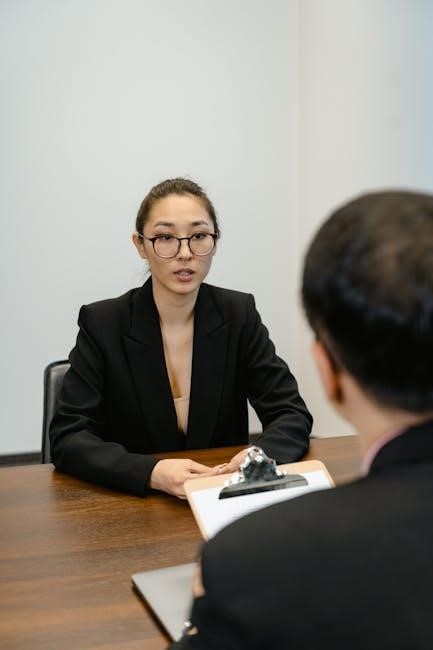
Some facilities incorporate skills-based assessments, like medication administration simulations or chart review exercises. Panel interviews, involving multiple interviewers, are also common. Understanding these formats beforehand allows you to tailor your responses and present yourself as a confident and capable candidate. Preparation is paramount for success in any nursing interview setting.
Behavioral Interview Questions – STAR Method
Behavioral questions assess your past performance to predict future behavior. The STAR method – Situation, Task, Action, Result – is crucial for crafting compelling answers. Begin by describing the Situation: provide context without excessive detail. Clearly outline the Task you were assigned or the challenge you faced.
Next, detail the specific Action you took, emphasizing your individual contribution. Avoid using “we” excessively; focus on your role. Finally, explain the Result of your actions, quantifying it whenever possible. For example, “I reduced medication errors by 15%…”
Common behavioral questions include: “Tell me about a time you faced a difficult patient,” or “Describe a situation where you had to work under pressure.” Practice using STAR with various scenarios. Prepare 5-7 detailed examples beforehand. This structured approach demonstrates clear thinking and provides concrete evidence of your skills and experience, significantly boosting your interview performance.
Clinical Scenario Questions – Assessing Critical Thinking
Clinical scenario questions evaluate your ability to apply nursing knowledge to real-world situations. Interviewers present hypothetical patient cases, demanding immediate, reasoned responses. These aren’t “trick” questions; they assess your critical thinking, prioritization skills, and clinical judgment. Expect questions like, “A patient’s oxygen saturation drops suddenly – what steps do you take?”
Structure your answer by first acknowledging the critical finding (low oxygen saturation). Then, systematically outline your actions: assess the patient, notify the physician, administer oxygen, and monitor response. Prioritize interventions based on patient safety. Demonstrate understanding of relevant protocols and guidelines.
Don’t hesitate to ask clarifying questions about the scenario – this shows engagement and thoroughness. Practice common scenarios (e.g., medication administration errors, sudden changes in vital signs). Focus on a logical, step-by-step approach, emphasizing patient well-being. A strong response showcases your ability to remain calm and effective under pressure.
Technical Nursing Questions – Demonstrating Core Competencies
Technical nursing questions verify your foundational knowledge and practical skills. Interviewers will assess your understanding of core competencies, like medication administration, wound care, and interpreting lab results. Expect questions such as, “Describe the proper procedure for inserting a Foley catheter,” or “How do you calculate a medication dosage?”
Prepare to articulate specific protocols and best practices. Demonstrate precision in your explanations, highlighting safety measures. For dosage calculations, show your work – even if not explicitly asked. Familiarize yourself with common medications, their actions, and potential side effects.
Be honest about your skill level; it’s better to admit unfamiliarity than to provide incorrect information. Highlight continuing education and any specialized certifications. Focus on evidence-based practice and staying current with nursing standards. A confident, accurate response proves your commitment to safe, competent patient care.
Questions About Patient Care and Safety
Patient care and safety are paramount in nursing, so expect extensive questioning in this area. Interviewers aim to gauge your commitment to minimizing risks and providing optimal care. Questions might include, “Describe a time you identified a potential safety hazard,” or “How do you prioritize patient needs during a chaotic shift?”
Focus your answers on the principles of patient-centered care, emphasizing communication, assessment, and intervention. Demonstrate knowledge of infection control protocols, fall prevention strategies, and medication safety procedures. Highlight your ability to advocate for patients and report concerns effectively.
Use the STAR method (Situation, Task, Action, Result) to illustrate your responses with concrete examples. Emphasize your proactive approach to identifying and mitigating risks. Showcase your understanding of the importance of teamwork and collaboration in ensuring patient safety. A strong response conveys your dedication to delivering high-quality, safe care.
Questions Regarding Teamwork and Collaboration

Nursing is inherently collaborative, demanding effective teamwork to deliver optimal patient care. Interviewers will assess your ability to function as a cohesive unit with physicians, other nurses, and ancillary staff. Expect questions like, “Describe a challenging team dynamic and how you navigated it,” or “How do you handle disagreements with colleagues?”
Emphasize your communication skills, active listening, and respect for diverse perspectives. Highlight your willingness to share knowledge, offer assistance, and receive constructive feedback. Demonstrate your understanding of roles and responsibilities within a healthcare team.
Use the STAR method to illustrate instances where you successfully collaborated to achieve positive patient outcomes. Showcase your ability to resolve conflicts professionally and maintain a positive team environment. Articulate your belief in the power of interdisciplinary collaboration to enhance patient safety and quality of care. A strong answer reflects your commitment to teamwork.
Questions About Handling Stress and Difficult Situations

The nursing profession is undeniably stressful, frequently involving emotionally charged situations and high-pressure environments. Interviewers aim to gauge your resilience and coping mechanisms. Prepare for questions such as, “Describe a time you faced a highly stressful situation at work and how you managed it,” or “How do you prioritize tasks when overwhelmed?”
Honesty is crucial, but frame your responses positively. Discuss healthy coping strategies like deep breathing exercises, mindfulness, or seeking support from colleagues. Demonstrate your ability to remain calm under pressure, prioritize effectively, and maintain focus on patient safety.
Avoid portraying yourself as immune to stress; instead, highlight your proactive approach to managing it. Share examples of how you’ve learned from challenging experiences and developed strategies to prevent burnout. Emphasize your commitment to self-care and maintaining a healthy work-life balance. A thoughtful response showcases emotional intelligence;

Questions About Professional Development and Goals
Interviewers seek candidates demonstrating a commitment to lifelong learning and career advancement within nursing. Expect questions like, “Where do you see yourself in five years?” or “What are your professional development goals?” Prepare thoughtful responses showcasing ambition and a proactive approach to skill enhancement.
Discuss specific certifications or advanced degrees you aspire to obtain, aligning them with the facility’s needs and your desired career path. Highlight your participation in continuing education courses, workshops, or professional organizations. Demonstrate a desire to stay current with the latest advancements in nursing practice.
Articulate how your goals contribute to improved patient care and the overall success of the healthcare team. Show enthusiasm for taking on new challenges and expanding your expertise. Emphasize your dedication to the nursing profession and a willingness to contribute to its ongoing evolution. A clear vision impresses!
Frequently Asked Questions About Nursing Specialties
Interviewers often gauge your understanding of various nursing specialties, even if the position isn’t directly within one. Be prepared to discuss your knowledge of areas like critical care, emergency nursing, oncology, pediatrics, and labor & delivery. Expect questions such as, “What interests you about these specialties?” or “Are you considering further specialization?”
Demonstrate awareness of the unique skills and responsibilities associated with each specialty. Highlight any relevant experience, such as clinical rotations or volunteer work, that exposed you to these areas. Show genuine curiosity and a willingness to learn more about different nursing roles.
Articulate how your skills and interests align with specific specialties, even if you’re unsure about pursuing one immediately. Emphasize your adaptability and openness to exploring different career paths within nursing. Research common specialties within the healthcare facility to tailor your responses effectively. Knowing the landscape is key!
Questions Related to Nursing Ethics and Legal Considerations
Ethical dilemmas and legal responsibilities are central to nursing practice. Interviewers will assess your understanding of these crucial aspects through scenario-based questions. Prepare to discuss situations involving patient confidentiality, informed consent, end-of-life care, and reporting obligations.
Expect questions like, “How would you handle a situation where a patient refuses life-saving treatment?” or “What are your responsibilities regarding reporting suspected abuse?” Demonstrate a strong commitment to ethical principles, such as beneficence, non-maleficence, autonomy, and justice.
Familiarize yourself with relevant legal frameworks, like HIPAA and Nurse Practice Acts. Articulate your understanding of professional boundaries and the importance of advocating for patient rights. Showcase your ability to navigate complex ethical challenges with sound judgment and integrity. Remember, ethical decision-making is paramount in nursing!

Questions About Experience with Electronic Health Records (EHR)
Proficiency in Electronic Health Records (EHR) is now essential for all nurses; Interviewers will want to gauge your experience with various EHR systems and your ability to utilize them effectively. Be prepared to discuss specific systems you’ve used – Epic, Cerner, Meditech, or others – and detail your comfort level with documentation, order entry, and data analysis.
Expect questions such as, “Describe your experience with documenting patient care in an EHR,” or “How do you ensure data accuracy when using an EHR?” Highlight your skills in navigating EHR interfaces, utilizing clinical decision support tools, and maintaining patient privacy within the system.
Emphasize your understanding of the importance of accurate and timely documentation for continuity of care and legal compliance. Showcase your ability to troubleshoot common EHR issues and adapt to new system updates. Demonstrate a commitment to leveraging EHR technology to enhance patient safety and improve healthcare outcomes.
Questions Assessing Communication Skills
Exceptional communication skills are paramount for nurses, impacting patient care, teamwork, and overall safety. Interviewers will assess your ability to convey information clearly, empathetically, and effectively to diverse audiences. Prepare to answer behavioral questions focusing on challenging communication scenarios.

Anticipate questions like, “Describe a time you had to explain a complex medical concept to a patient with limited understanding,” or “How do you handle communicating with a distressed family member?” Focus on active listening, non-verbal cues, and tailoring your communication style to the individual’s needs.
Highlight your experience with interprofessional communication – collaborating with physicians, therapists, and other healthcare professionals. Demonstrate your ability to provide constructive feedback, resolve conflicts, and advocate for patients effectively. Showcase your commitment to clear, concise, and respectful communication in all interactions.
Salary and Benefits Negotiation Questions
Discussing compensation can feel daunting, but preparation is key! Interviewers may subtly gauge your salary expectations or directly ask about your requirements. Research average nursing salaries in your location and specialty using resources like Payscale or Salary.com before the interview.
Be prepared to answer questions like, “What are your salary expectations?” or “What benefits are most important to you?” Avoid stating a specific number immediately; instead, express a range based on your research and experience. Highlight your value and contributions, justifying your desired compensation.
Consider negotiating beyond salary – explore benefits like health insurance, paid time off, continuing education allowances, and retirement plans. Don’t be afraid to politely inquire about opportunities for salary increases based on performance or certifications. Remember, negotiation is a conversation, and demonstrating your worth is crucial.
Preparing Your Own Questions to Ask the Interviewer
Demonstrating genuine interest is vital, and asking thoughtful questions achieves this! Preparing questions beforehand showcases your engagement and allows you to gather crucial information about the role and the organization. Avoid questions easily answered on the hospital’s website; focus on deeper insights.
Consider asking about team dynamics, opportunities for professional development, the unit’s approach to patient care, or the hospital’s commitment to evidence-based practice. Inquire about the onboarding process and support systems for new nurses. Examples include: “How does the team collaborate to ensure optimal patient outcomes?” or “What opportunities are available for continuing education?”
Asking about the challenges and rewards of the position demonstrates your realistic perspective. Remember to tailor your questions to the specific role and interviewer. Thoughtful questions leave a lasting positive impression and help you determine if the position aligns with your career goals.
Resources for Nurse Interview Preparation (PDF Downloads)
Comprehensive preparation often requires utilizing readily available resources! Several websites offer downloadable PDF guides containing sample interview questions specifically tailored for nursing positions. These resources frequently include detailed answer examples, showcasing the STAR method and best practices for articulating your skills.
Explore websites like Nurse.com, AllNurses, and Indeed, which often host free PDF downloads. Additionally, professional nursing organizations, such as the American Nurses Association (ANA), may provide interview preparation materials for members. Look for guides focusing on behavioral questions, clinical scenarios, and technical nursing knowledge.
Remember to supplement these PDF resources with practice interviews and self-reflection. Utilize online mock interview platforms to simulate the interview experience. Downloading and reviewing these guides will significantly boost your confidence and preparedness, increasing your chances of success!
Final Thoughts: Acing Your Nursing Interview
Remember, a successful nursing interview isn’t just about reciting correct answers; it’s about demonstrating your passion for patient care, critical thinking skills, and collaborative spirit. Thorough preparation, utilizing resources like PDF guides with sample questions and answers, is paramount.
Focus on showcasing your ability to handle challenging situations with empathy and professionalism. Practice the STAR method to articulate your experiences effectively. Highlight your commitment to lifelong learning and professional development within the nursing field. Confidence, coupled with genuine enthusiasm, will leave a lasting impression.
Ultimately, view the interview as a conversation – an opportunity to learn about the role and demonstrate how your skills and values align with the organization’s mission; Believe in your abilities, and remember that your dedication to nursing is your greatest asset. Good luck, future nurse!